

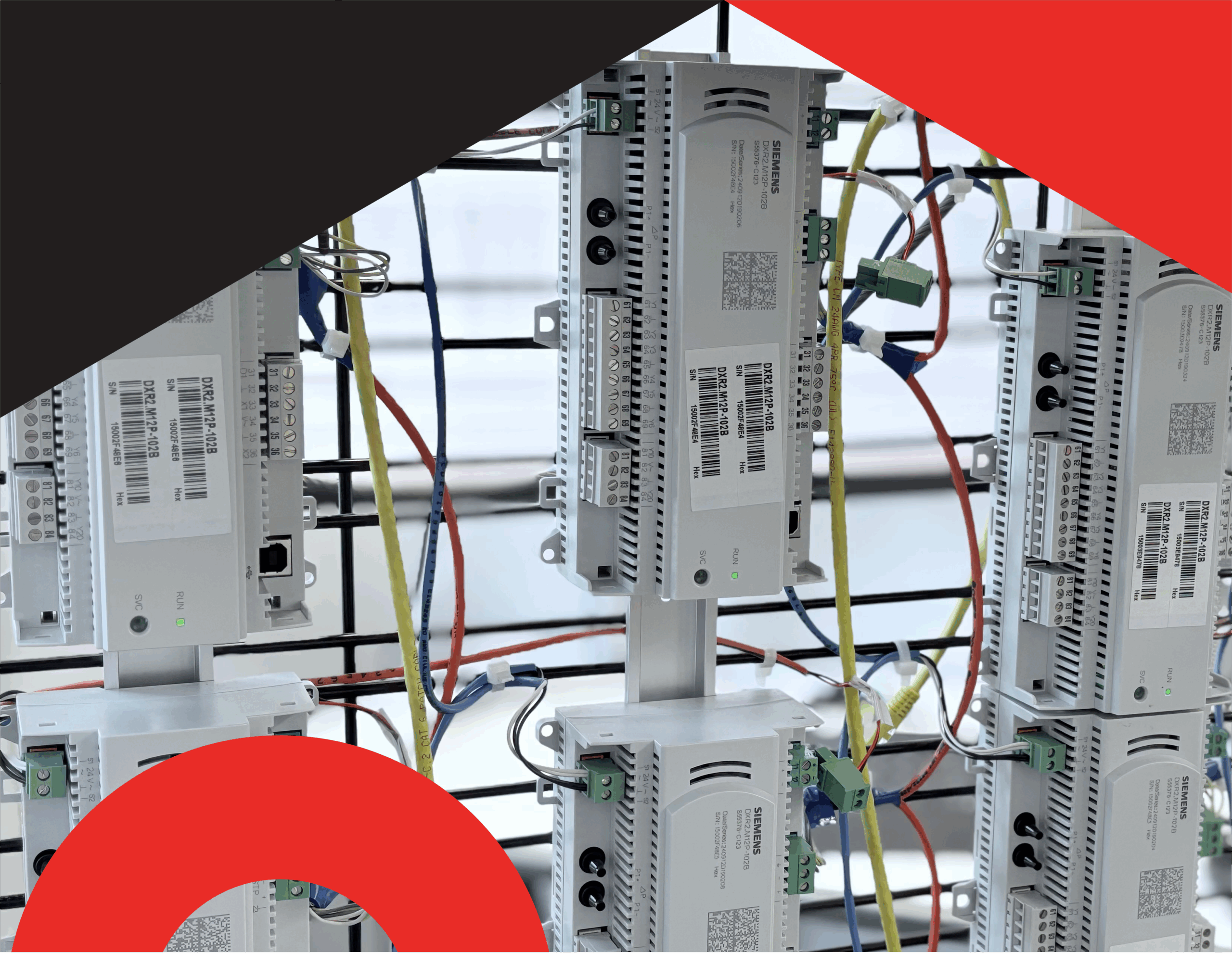
Building Automation Systems (BAS) are the backbone of commercial building operations, managing HVAC, lighting, and energy systems through intelligent building controls. But as these systems age, facility managers are faced with a critical decision: Should you upgrade your BAS or fully replace it?
The answer impacts more than day-to-day operations. It directly affects energy performance, system reliability, and your building’s Total Cost of Ownership (TCO). Making the right call starts with understanding how your current building automation system measures up against evolving technology, performance standards, and long-term goals.
BAS components generally have a service life of 10 to 15 years, according to the ASHRAE Handbook—Applications. Beyond that, reliability declines, and integration with newer technologies becomes challenging. If your system is near or past this point and shows signs of failure, a full replacement is likely the smarter move.
However, if core components are still performing well, targeted upgrades—such as modernizing the interface or replacing outdated controllers—can breathe new life into your system at a lower cost. This approach requires regular performance audits and preventive maintenance to accurately assess system health and plan proactively.
TIP: Don’t wait for a system failure. Establish a routine assessment schedule, guided by ASHRAE best practices, to catch performance degradation early and avoid emergency replacements.
Technology in the BAS world evolves rapidly. Newer systems offer features like IoT sensor integration, real-time analytics, cloud access, open protocols (e.g., BACnet), and AI-powered diagnostics. Older, proprietary systems often can’t support these advances, and worse, vendors may no longer support legacy hardware or software.
Modern BAS platforms are designed for scalability, modular upgrades, and interoperability, which help you avoid vendor lock-in and adapt more easily to future innovations. Choosing a system with open architecture ensures you won’t have to start from scratch when your needs change or expand.
TIP: Select a BAS that supports open protocols and can integrate with future smart building technologies. Built-in cybersecurity and remote management capabilities are also essential in today’s digital landscape.

Rising utility bills, inconsistent comfort levels, and frequent service calls are signs your BAS may be underperforming. Using energy benchmarking tools like BOMA’s Building Energy Efficiency Program (BEEP) or ENERGY STAR Portfolio Manager, facility teams can measure performance against similar properties.
If your BAS struggles to maintain performance or support newer equipment, replacement may be the better investment. If the issues are isolated—such as with outdated user interfaces or limited control zones—an upgrade can resolve performance gaps more affordably.
TIP: Consider conducting a retro-commissioning study to uncover hidden inefficiencies and determine whether strategic upgrades or full replacement will yield better long-term results.
Budgets will always play a role, but focusing solely on upfront costs can lead to short-sighted decisions. A less expensive upgrade might seem appealing now but lead to higher energy and maintenance expenses down the line. A more robust system may cost more initially but deliver long-term savings through energy efficiency, reduced downtime, and lower labor costs.
According to the DOE Better Buildings Initiative, facilities that upgrade to modern BAS solutions can reduce energy consumption by 10–20%, especially when paired with recommissioning and ongoing monitoring.
TIP: Build a Total Cost of Ownership (TCO) model that includes installation, energy savings, maintenance, system lifespan, and available incentives or utility rebates. This will provide a clearer picture of ROI over 10–15 years, not just in the first year.
Choosing whether to upgrade or replace your BAS isn’t just a facilities issue – it’s a strategic business decision. The right move improves occupant comfort, meets sustainability goals, enhances system resiliency, and ultimately lowers your total cost of ownership.
Whether you’re looking to modernize a legacy system or explore a full BAS replacement, let our building controls experts guide you through your options and recommend the right path forward.
Contact your BCS Representative to start the conversation and explore how your BAS can work harder and smarter for your building.
1730 E Douglas Ave.
Wichita, KS 67214
(316) 267-5814
115 N Kansas Ave.
Wichita, KS 67214
(316) 239-7641
11200 Corporate Ave.
Lenexa, KS 66219
(913) 338-2211
10915 Eicher Dr.
Lenexa, KS 66219
(913) 871-5478
Building Comfort Zones since 1985
Customer Support: (316) 267-5814
Copyright © 1985 – 2026 Building Controls and Services, Inc.
Web Design and SEO by Digital Lagoon
Learn more about our services and offerings.
You can now submit warranty claims online via our fast and convenient online warranty process.
Become an expert in building intelligence. Save money by lowering the total cost of ownership of your facility equipment. Sign up to receive helpful tips, tricks, and insights to facility management from people who’ve dealt with it all.