Posted on
Posted in Mechanical Equipment

Why is ClimateCraft the right selection for building owners in all industries? ClimateCraft offers premium air handling units (AHU’s) with a unique removable panel design and full thermal break construction. But, what how does ClimateCraft stand out from other air handling unit manufacturers? Its value is in the innovative construction methods and materials that ensure at least a 40-year lifespan. ClimateCraft uses fans and coils that are designed and built in-house, so any difficulties with HVAC may be effectively resolved by their own engineering experts. These factors make ClimateCraft products an expert choice for all environments, from commercial and government to healthcare and education.


When there is a physical facility challenge, need for long term durability, or special application, custom units are suitable to these conditions. Standard AHUs often times do not meet the specific requirements a building has, ClimateCraft accommodates to these specifications by creating custom AHUs that fit any need. They do this by offering various sizes in units, using special materials that endure any environment, and engineering quality performance to meet unique stipulations, schedules and budget.

This company prides itself on consistency, supreme quality and value. Engineering excellence and complete practicality is rooted in every ClimateCraft product. For example, the FlexSpeed offers great efficiency rates by powering fan arrays with variable frequency drives. Compared to general purpose motors, FlexSpeed uses 3% less power and up to a 5% reduction in power usage. There’s also an increased reliability and reduced need for motor maintenance because of the cooler usage of this motor, overall giving it a longer lifespan.

Another popular ClimateCraft product, the MatrixMonitor, frequently monitors equipment operations, improves reliability and adds lifespan to equipment, which ultimately saves substantial costs. Some of its key features and abilities include monitoring fan vibration that may predict and prevent motor failure, a microprocessor-based design that reduces internal wiring, and automatic adjustment for air density variations for increased accuracy.

Overall, ClimateCraft offers innovative, custom AHUs that can fit the needs of buildings in all environments. These unique air handling units can save time and money daily, and in the long run. Building owners can focus and allocated savings to other daily operations, while ClimateCraft products provide a comfortable, efficient environment.

Posted on
Posted in Energy Management

Do you dread checking your building’s utility bills month after month? Well, you aren’t alone. According to Building Owners and Managers Association (BOMA), building owners spend approximately 22% of their total operating costs on utilities, or about $2.25 per square foot of space each year. For corporate facilities, this number increases to $2.70.

But power, gas and water are essential for all facilities, so you can’t necessarily turn them off. You can, however, implement some smart budgeting tips to better plan for utility expenses.

Analyze Past Utility Bills

Being that utilities are metered, you won’t know exactly how much your building’s power and water will cost until you receive a bill the following month — and that’s okay. By looking at utility bills from previous months, you can predict your building’s upcoming utility costs.

If you don’t have your old utility bills, contact the utility providers to request a copy. They should gladly send you an extra to assist with your budgeting efforts. It’s recommended that you analyze between 12-24 months of past utility bills, as this reveals seasonal changes and subsequent fluctuations in utility usage. Using this information, you can predict upcoming utility expenses for your building.

If you save your bill stubs, you can get an idea how much you spend in a typical month. Your utility company can provide you with a record of your utility bills if you don’t save your stubs, or you can look back over bank statements to find how much you’ve been paying. Keep an eye out for anomalies like record heat waves or cold snaps. Note the trends in your utility bills so you’ll have an idea which months make the highest demands on your utility budget. Being prepared can help you fine tune your monthly budget based on typical utility costs.

Ask About Projected Rate Increases

In addition to reviewing historical utility expenses, you should also inquire about possible rate increases in the near future. Utility rates constantly change due to factors such as natural disasters, inflation, weather, and legal reform. So even if you’ve paid the same rate for your building’s power over the last 12 months, your power company could increase your rate.

If your utility rates are expected to increase, you should set aside additional funds to cover the increase in your budget.

Invest in a Low-cost Utility Bill Management Service

If you have multiple buildings and with several utility bills/meters consider investing in a utility bill management service. There are several on the market today that provide solutions that forges utility invoice and data reception, auditing, accounts payable exporting, and aggregated energy usage analysis.  The solutions are an Internet and cloud-based systems, that are fully customizable and can provide a hierarchy of data from the meter to any organization-wide level for reporting. Your utility expenditures and consumption will be viewable across their entire organization to improve management interaction and engagement.  The systems can track costs, usage, and demand for the utility types such as electricity and natural gas, as well as water, waste, etc. Essentially, anything with an invoice can be tracked in the systems.  The solutions are capable of tracking limitless facilities and accounts and provides both weather normalization and benchmarking capabilities saving you time and energy sorting through all the bills and data.

Look for Ways to Reduce Your Building’s Energy and Water Usage

Of course, you can also seek ways to lower your building’s utility bills. When used in conjunction with a proper budgeting strategy, this can ease the burden of otherwise costly power, gas and water bills.

  • Replace incandescent bulbs with energy-efficient alternatives such as compact fluorescent lighting (CFL) or light-emitting diode (LED) bulbs.
  • Considering installing high-efficiency toilets. Also known as a low-flow toilet, they use 4.8 liters of water or less per flush, whereas a traditional toilet uses 6 liters or more.
  • Monitor your building’s power usage to determine where it’s being used the most.
  • Hire a heating, ventilation and cooling (HVAC) company to routinely inspect your building’s central air conditioning and heating.
  • Install insulation around water heaters and hot water pipes.
  • Choose energy-efficient appliances and equipment.
  • Train staff to implement these tips.

Budgeting for utilities is an important step in operating a building. Turning a blind eye often results in “sticker shock” when you see the final bill. By following the tips outlined above, however, you’ll have a better understanding of what to expect with your monthly utility bills.

For more utility budgeting tips, contact us today. Performance Solutions is the industry’s leading provider of facility improvement projects. With our expertise, you can drive down the cost of utilities and associated expenses.

Posted on
Posted in Mechanical Equipment

HVAC systems operate by taking air from the outdoors, conditioning it (heating, cooling humidifying/dehumidifying) and blowing it indoors. Pretty simple and straight forward in concept, but potentially expensive depending on where you live and the time of year.

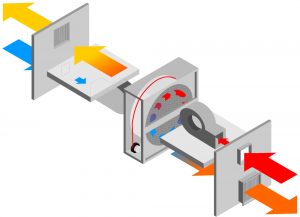
energy recovery ventilator 300x217One of the issues with the basic design is that all the incoming air needs to be modified by the system to the requirements for the indoor air. It needs to be filtered, heated or cooled, and it needs to have moisture added or removed which is quite a bit of work. An ERV (Energy Recovery Ventilator) is an add-on system for your HVAC unit that preconditions incoming air using the stored energy in exhaust air. In order to maintain building pressure, air is expelled as new air is drawn into a building. This expelled air has already been treated. The ERV utilizes the energy in this exhaust air to condition incoming air, making it closer to the required conditions. This means the HVAC system has less to do. This translates into significant savings.
A typical ERV system recovers over 50% of the energy in the air leaving the system. This energy is used to condition the incoming air temperature and humidity. Since the HVAC system is starting with air closer to its goal, it has less work to do.

The nice thing about ERV units is that they can often be added to existing HVAC systems allowing you to reap the savings without a huge financial outlay.

Posted on
Posted in Energy Management

Is HVAC preventative maintenance on your to-do list? If not, it should be. While your heating and air system may not be something you spend much time thinking about, it’s a good idea to schedule in regular maintenance. Mark it in your calendar and schedule twice a year, and you’ll save money in both the short and long term.

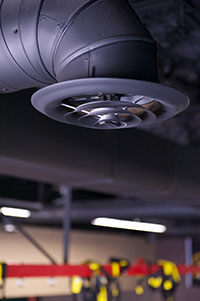
Industrial Air Duct and Vent

How Does HVAC Maintenance Save You Money?

There are several money-saving reasons to get your system checked twice a year. You’ll want to schedule maintenance in the Fall and then again in the Spring.

A technician will come out and check to make sure your unit is in good working order. They will run tests and check the exterior and interior of your unit to check for wear and tear. They’ll clean and if necessary replace filters. The inspection will include your thermostat which will be cleaned and calibrated.

Why Go Through the Trouble?

Scheduling maintenance in the spring, before the summer heat hits can help you avoid problems in the warm months. Don’t wait till your building feels like an oven before you find a problem. Especially since it will be much harder to get an appointment during the busy summer season.

The same goes for scheduling maintenance in the fall. There is nothing worse than turning on your furnace after the temperatures drop only to find out there is no heat!

While catching problems early on is one compelling reason to schedule preventative maintenance, another reason is saving money. Regular maintenance helps your HVAC system operate more efficiently. This saves you money on heating and cooling each and every month.

And, maintenance extends the life of your system. This means you’ll avoid spending thousands of dollars on a new furnace or air conditioner before it’s time.

Those are three reasons that HVAC preventative maintenance can help save you money and avoid stress. Two times a year, every year. By maintaining your system you’ll:

  1. Avoid system outages that cause major headaches and discomfort.
  2. Decrease monthly energy costs significantly.
  3. Avoid costly repairs and replacements, your system will last longer when properly maintained.
Posted on
Posted in Life Safety Systems

Many schools find themselves using outdated security systems. Updating the system might seem like too much effort, too much expense, or simply something that has been put off for later. Your school, from elementary to college or university, however, needs a solid security system. These five benefits of security systems for schools will help you make security a priority for your school.

school security systems

Keep an eye on what’s going on across the campus

The bigger your school, the harder it is for your administration and security guards to have eyes everywhere. Security cameras, however, can fill in those gaps. That allows you to keep track of:

    • Who is in the building
    • Anyone who is behaving oddly or out of place
    • What students are doing

The more you know about what people are doing in your school building, the better you can provide for the safety of your students. Security systems make it easy to catch problems before they become serious issues.

Bring a response faster

From fire alarms that are connected direct to the fire station to panic alarms that are connected with the police force, your security system can help you summon help fast in the event of an emergency–all with little more than the press of a button. That means that you can concentrate on ensuring your students’ safety while still knowing that first responders are on their way in the event of an emergency.

Reduce incidence rates

Knowing that your school has a solid security system is often enough to keep many of your students in line. While not everyone will be deterred by the knowledge that there’s a strong security system in place, some students will be more likely to toe the line because they know that there will be proof of their misbehavior on camera for later viewing. Not only that, the obstacle of a security system can prevent intruders from finding their way onto your campus, especially if they’re after a single student or teacher. The tighter your security, the greater the likelihood that troublemakers will choose to target other locations instead of yours.

Keep an eye on trouble from a distance

Emergencies in schools have, unfortunately, become increasingly common. Security systems don’t just help you prevent those emergencies. They also help you when you’re in the middle of them by giving you a clear view of the situation and the individuals involved. This can allow members of the police force to see what they’re walking into with an active shooter situation, provide guidance during fights between students, or offer surveillance that will let you know where your intruder is if they happen to make it into the building.

Increase the security parents and students feel

School violence has only increased over the past several years, and both students and parents are feeling the discomfort associated with it. Some students struggle to feel safe at school. Parents may be uncomfortable sending their children to an environment where violence is all too common. Your security system, however, increases the safety that both students and parents are able to feel when they visit your school building. School should be a safe place for all of its students, and your security system helps provide that sense of security.

It’s time to install a security system at your school that will protect your students and faculty, increase their sense of protection, and get help to them fast in the event of an emergency. You can’t always prevent violence, but you can decrease the odds that it will happen at your school and help protect your students when it does.

Posted on
Posted in Energy Management

Budget-savvy companies are constantly on the lookout for ways to make better use of space. In many cases, space-saving strategies allow a company to do more with existing space, or even downsize into a more affordable building. It is a different way of looking at work space, but it can be effective and help with long-term goals. Instead of staying stuck in a traditional mindset, consider creative ways that facility organization can save money.

Ways Facility Organization Can Save Money

For buildings with offices or shared work spaces, “hot-desking” is a popular trend among companies looking to use space more efficiently. Instead of assigning a desk or workspace to each employee, the office functions as more of shared space rather than assigning people to certain places or desks. Flexible work schedules help this strategy function more efficiently. As a bonus, employees do not grow weary of working in the same area day after day.

Another thing to keep in mind is the design of your facility. Environment has a direct effect on mood as well as productivity. Spending the time to make your building an open workspace with ergonomic furniture may sound like a big investment of time and money, but the end results of a more productive workspace are totally worth that initial investment.

Creative thinking when it comes to using available space helps a company save money and makes for a better, more fruitful work environment. Public areas that are seldom used do double-duty as work areas for a mobile workforce. For example, if a company has a cafeteria or dining area, the space likely sits empty for most of the day. Instead, designate certain areas as workspace for salesmen, technicians and other employees who do not work in the building regularly.

These space-saving strategies, while simple, represent a paradigm shift for companies accustomed to more traditional space usage strategies.

Posted on
Posted in Mechanical Equipment

A heat pump lives up to its namesake by pumping hot outside air into the home during the winter, and pumping cold outside air into the home during the summer. It’s often preferred in climates with year-round warm weather over conventional air conditioning systems because of its energy-saving benefits.

But there are many different types of heat pumps, one of which is water source heat pump. So, what exactly is a water source heat pump?

Water Source Heat Pump Explained

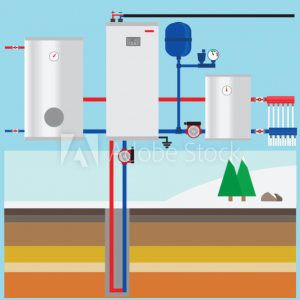
water source heat pump 300x300All heat pumps rely on some type of source from which to extract heat. A conventional heat pump, for instance, uses air. To warm a home or building, it extracts heat from the outside air, pulling this warm air inside. As the outside temperatures begin to drop later in the year, however, these air source heat pumps become less effective.
A water source heat pump also extracts heat to warm a home or building. But it differs in the sense that it extracts heat from water instead of air. A typical water source heat pump features a system of pipes submerged in a body of water. When water flows through these pipes, it extracts heat from the surrounding water. The heat pump then transfers this hot air into the home or building.

To cool a home or building in the summer, a water source heat pump performs this operation backwards by transferring the heat to the water source. These units are recommended in climates with cool temperatures. However, you’ll need access to a body of water to install and use one.

To learn more about water source heat pumps and how they operate, contact us! AAON’s Water Source Heat Pump line is now available through BCS. AAON has begun selling water source heat pumps.

Posted on
Posted in Company News

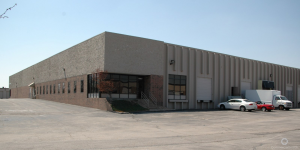
BCS Parts, a division of BCS in Wichita, KS, is opening a parts wholesale store in Overland Park, KS at 8950 Bond St. Overland Park, KS 66214. The store opened for business on April 3 and will be hosting a Grand Opening Event in the coming weeks. The BCS Parts Kansas City team comes with over 36 years of industry experience.

8950 Bond Overland Park 300x150
BCS Parts serves Commercial and Residential Mechanical Contractors and commercial facility and maintenance personnel by providing thousands of HVAC parts and accessories from a variety of vendors. The store stocks and sells quality OEM, aftermarket products and essential tools. Free Delivery and on-site parts stocking programs are also available.

BCS Parts is an authorized distributor for AAON, including its new line of Water Source Heat Pumps, LG, Delta, KMC, Dunham-Bush, Sky Blade, Grease Master, Concepts & Designs, Yaskawa and Monoxivent products, to name a few, in addition to many name brand aftermarket product lines.

Additionally, BCS Parts offers a wide selection of specified training to support the needs of Kansas City area contractors. Classes include product and application-specific training for continuing education credits. A sales incentive program for LG Home Comfort Systems is also available to interested Contractors.

Contact us today for your HVAC parts, accessory and training needs: 913.871.5478 or info@bcspartsks.com

Kansas City team:

tom tallon 0 Tom Tallon
Product Sales Manager
ttallon@bcspartsks.com
316.252.7259

sean snyder 0 300x300 Sean Snyder
Parts Store Manager
ssnyder@bcspartsks.com
316.617.7359

Scott Peery sq 300x300 Scott Peery
Senior Parts Sales Specialist
speery@bcspartsks.com
913.295.0468

Ryan Spaedy sq 300x300 Ryan Spaedy
Warehouse & Counter Coordinator
rspaedy@bcspartsks.com
913.209.4427

Posted on
Posted in Energy Management

This can be a tricky time when it comes to tax breaks related to green energy. There is much speculation as to where the tax code is going, and what breaks will remain at the end of 2017. However, there are still one or two items that you can capitalize on now, and a few to keep an eye on for the future.

Green Building Tax Deduction Tips

A good place to start is the Energy Investment Tax Credit. Also called the “Solar Tax Credit,” this credit is one of the more straightforward ways to go solar, and decreases the tax burden on your business. This credit is equal to 30 percent of the expenditures required to install a solar energy system–with no cap on maximum credit. This means that you can opt for top of the line solar energy systems without fear that the tax credit will leave you high and dry.

This tax credit applies to all systems that begin construction before December 31st 2023. However, it is important to note that the value of this credit decreases the closer you get to 2023. For instance: on January 1st 2020, the highest tax credit receivable is 26 percent. To get the 30 percent rate, construction has to begin before the end of 2019.

For a more comprehensive break, businesses have been relying on the infamous 179D tax break for years. 179D is lauded as the holy grail of green building tax deductions. This program provides $1.80 in tax breaks per foot of a commercial building that save at least 50 percent of the heating and cooling energy of a system, according to the Department of Energy. Additionally, you can save 60 cents per square foot for systems affecting the building envelope, as well as lighting.

This bill was extended in 2016 to apply retroactively to systems beginning construction in 2015 and earlier. However, there has been little news on the future of the break as we move into 2017. Many are hopeful that 179D will be extended (and even increased) soon, but this is largely speculation. This has traditionally been used as a huge tax break for sustainable commercial buildings, so it will be important to keep an eye on this policy this year.

This year, it may be best to focus on systems-specific tax breaks. For instance, installing a biomass stove can earn you a $300 federal tax credit, provided it has an energy efficiency rating of 75 percent or better. Certain central air conditioning systems also qualify for a $300 tax credit. Even some non-solar water heaters that have efficiency ratings of over 90 percent qualify for a $300 tax break. If you maximize your usage of all these individual incentives, that’s already a total of $900 saved come tax day…no matter what happens in terms of large-scale energy policy.

The takeaway here is to be specific. Understanding how to maximize the efficiency of your existing building–or install the right systems if you’re due for an upgrade–will make a world of a difference. Creating an environmentally sustainable building is a reward in itself, but that doesn’t mean that you can’t be compensated for it. Inevitably, your building will require maintenance, why not let the tax code inform those decisions to help increase efficiency and put some cash back in your pocket?

For more information on how to use the green tax code to your advantage, visit our website. To get a personalized opinion on how you can maximize your savings and efficiency, contact us.

Posted on
Posted in Mechanical Equipment

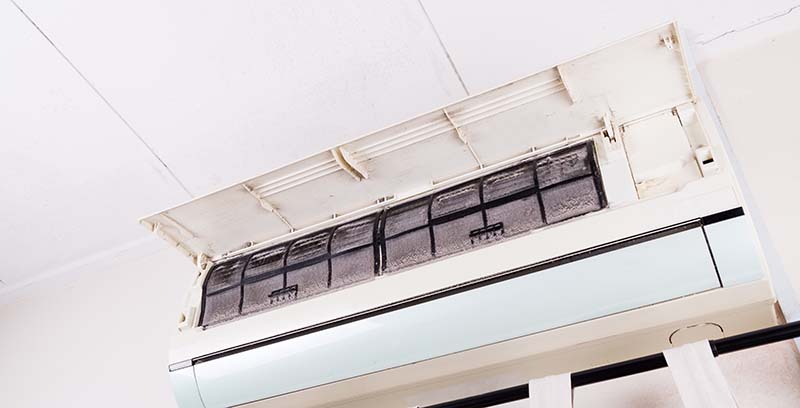
Evaporator coils are an integral part of the heat exchange portion of your HVAC unit. Performing periodic maintenance on these coils introduces several benefits all of which translate into saving you money.

Benefits of Keeping Coils Clean

    1. Better efficiency. Clean coils allow for optimal heat exchange, letting your system run at peak performance. When the coils become coated with dirt and debris, their ability to perform rapidly degrades. This results in a system that works harder to cool the same amount of air costing you more money.


    1. Longer system life. Filthy coils force your HVAC unit to work harder to perform the same job. The dirtier the coils, the more your system must strain to keep running. This stress causes premature wear on the entire system, not just the parts around the coils. The longer your system is forced to fight, the more damage is done and the sooner you have a serious breakdown or even will end up replacing the system.


    1. Healthier air. You may not realize it, but clean coils mean cleaner air. Filters work fine, but dirt on your coils introduces dust and debris into the system where filters are not designed to catch and remove it. This means that these contaminants get blown back into your building, reducing the overall air quality.


    1. Prevent major issues. While cleaning the coils will keep your system running along at optimal efficiency, the cleaning serves a secondary purpose. During routine maintenance, trained technicians get to inspect the system for potential problems, often catching them early when it is less expensive to address them.

Contact Us

Learn more about our services and offerings.

Service Requests

Our team is ready to assist. Please use one of the options below to submit your service request:

Warranty Claims

You can now submit warranty claims online via our fast and convenient online warranty process.

Become an Expert

Become an expert in building intelligence. Save money by lowering the total cost of ownership of your facility equipment. Sign up to receive helpful tips, tricks, and insights to facility management from people who’ve dealt with it all.

Become an Expert

Become an expert in building intelligence. Save money by lowering the total cost of ownership of your facility equipment. Sign up to receive helpful tips, tricks, and insights to facility management from people who’ve dealt with it all.