

Do you dread checking your building’s utility bills month after month? Well, you aren’t alone. According to Building Owners and Managers Association (BOMA), building owners spend approximately 22% of their total operating costs on utilities, or about $2.25 per square foot of space each year. For corporate facilities, this number increases to $2.70.
But power, gas and water are essential for all facilities, so you can’t necessarily turn them off. You can, however, implement some smart budgeting tips to better plan for utility expenses.

Analyze Past Utility Bills
Being that utilities are metered, you won’t know exactly how much your building’s power and water will cost until you receive a bill the following month — and that’s okay. By looking at utility bills from previous months, you can predict your building’s upcoming utility costs.
If you don’t have your old utility bills, contact the utility providers to request a copy. They should gladly send you an extra to assist with your budgeting efforts. It’s recommended that you analyze between 12-24 months of past utility bills, as this reveals seasonal changes and subsequent fluctuations in utility usage. Using this information, you can predict upcoming utility expenses for your building.
If you save your bill stubs, you can get an idea how much you spend in a typical month. Your utility company can provide you with a record of your utility bills if you don’t save your stubs, or you can look back over bank statements to find how much you’ve been paying. Keep an eye out for anomalies like record heat waves or cold snaps. Note the trends in your utility bills so you’ll have an idea which months make the highest demands on your utility budget. Being prepared can help you fine tune your monthly budget based on typical utility costs.
Ask About Projected Rate Increases
In addition to reviewing historical utility expenses, you should also inquire about possible rate increases in the near future. Utility rates constantly change due to factors such as natural disasters, inflation, weather, and legal reform. So even if you’ve paid the same rate for your building’s power over the last 12 months, your power company could increase your rate.
If your utility rates are expected to increase, you should set aside additional funds to cover the increase in your budget.
Invest in a Low-cost Utility Bill Management Service
If you have multiple buildings and with several utility bills/meters consider investing in a utility bill management service. There are several on the market today that provide solutions that forges utility invoice and data reception, auditing, accounts payable exporting, and aggregated energy usage analysis. The solutions are an Internet and cloud-based systems, that are fully customizable and can provide a hierarchy of data from the meter to any organization-wide level for reporting. Your utility expenditures and consumption will be viewable across their entire organization to improve management interaction and engagement. The systems can track costs, usage, and demand for the utility types such as electricity and natural gas, as well as water, waste, etc. Essentially, anything with an invoice can be tracked in the systems. The solutions are capable of tracking limitless facilities and accounts and provides both weather normalization and benchmarking capabilities saving you time and energy sorting through all the bills and data.
Look for Ways to Reduce Your Building’s Energy and Water Usage
Of course, you can also seek ways to lower your building’s utility bills. When used in conjunction with a proper budgeting strategy, this can ease the burden of otherwise costly power, gas and water bills.
- Replace incandescent bulbs with energy-efficient alternatives such as compact fluorescent lighting (CFL) or light-emitting diode (LED) bulbs.
- Considering installing high-efficiency toilets. Also known as a low-flow toilet, they use 4.8 liters of water or less per flush, whereas a traditional toilet uses 6 liters or more.
- Monitor your building’s power usage to determine where it’s being used the most.
- Hire a heating, ventilation and cooling (HVAC) company to routinely inspect your building’s central air conditioning and heating.
- Install insulation around water heaters and hot water pipes.
- Choose energy-efficient appliances and equipment.
- Train staff to implement these tips.
Budgeting for utilities is an important step in operating a building. Turning a blind eye often results in “sticker shock” when you see the final bill. By following the tips outlined above, however, you’ll have a better understanding of what to expect with your monthly utility bills.
For more utility budgeting tips, contact us today. Performance Solutions is the industry’s leading provider of facility improvement projects. With our expertise, you can drive down the cost of utilities and associated expenses.
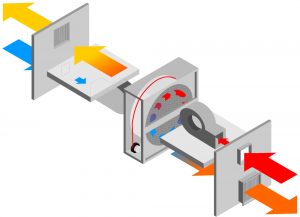
 One of the issues with the basic design is that all the incoming air needs to be modified by the system to the requirements for the indoor air. It needs to be filtered, heated or cooled, and it needs to have moisture added or removed which is quite a bit of work. An