Posted on
Posted in Energy Management

Many companies are finding benefits by using on-site water recycling. This process allows a business to recycle water to meet their demands. It saves money and energy while providing the uses of regular treated water.

Benefits of On-Site Water Recycling

What is On-Site Water Recycling?

Companies use water daily. After use the waste water gets taken away by drainage. On-site water recycling keeps the used water in the facility. The waste water is then treated. The purpose of the recycled water determines the amount of treatment required.  The EPA has strict treatment guidelines for treatment. There is also state and Federal oversight to assure safety.

Most use recycled water for nonpotable reasons. One use is for landscape irrigation. Another use for recycled water is flushing toilets. Many industrial facilities and sites need water for cooling purposes. Recycled water works for this purpose as well.

Financial Benefits

It takes energy and money to bring fresh water daily. The costs include extraction, treatment, and transportation to its destination. These costs fall on the company. An on-site water recycling system provides extra water to meet certain needs. This reduces the need for an outside water source and reduces overall costs.

Environmental Benefits

Water recycling provides three main benefits to the environment. It lessens the risk to the natural ecosystems. It also decreases waste water which is an environmental concern. Finally, it decreases pollution. Ecosystems are at risk from regular water diversion. Water gets taken from areas and diverted to treatment plants. Then it gets transported to various destinations for use. Using recycled water takes away the need for excessive water from an outside source. This leaves more for ecosystems that depend on the natural water supply.

Treated waste water still causes problems. Treated waste water discharged in areas of salt water unbalance the environment. This poses a threat to the marine and plant life. Using recycled water decreases this process and protects these plants and animals. This process also reduces pollution. Waste water discharge adds pollution, even after treatment. By reducing waste water, it lowers the amount of pollutants introduced into the natural water bodies.

Using an on-site water recycling system provides benefits. These include financial and environmental. For more information, contact us today.

Posted on
Posted in Energy Management

Organizations thrive on comfort, efficiency and productivity, and cost savings. Facility upgrades and building automation solutions are excellent ways to avoid breakdowns, increase sustainability, and reduce energy waste. Case studies prove that strategic upgrades can deliver specific benefits.

Benefits of Facility and Building Updates

Financial Benefits

There are both direct and indirect costs that come with facility administration and maintenance. Automation technology can significantly reduce monthly utility bills, which are one of the largest controllable facility budget items. Automation solutions also reduce maintenance costs, because optimized equipment that is strategically used will experience less wear-and-tear. Repairing and replacing outdated and inefficient building equipment is expensive, but newer technology solutions are designed for long-term efficient operation.

Operational Benefits

Real-time reports and graphical displays tell management what exactly is happening without having to access spaces that are confined, elevated or remote. This reduces the need to deal with OSHA confined spaces and fall protection regulations. The value of commercial buildings is directly related to the net operating income, so increasing operational efficiency can improve the bottom line.  Unexpected equipment breakdowns can cost a business thousands of dollars a minute. Building automation and facility technology use preventative maintenance programs that avoid costly breakdowns and emergency repairs.

Personnel Benefits

Maintenance managers and facility administrators will enjoy simplified operations through digital controls and software solutions. This will free their time up to deal with more important duties. Automated systems and computerized controls maintain appropriate temperatures and lighting levels to provide optimal comfort. This can lead to a more productive workforce and may also increase the comfort of visitors, clients, and the public.

When considering major equipment repair or replacement, it’s important to evaluate each against the cost of upgrading to a newer technology. Facility upgrades and building automation manage the sensitive balance between profitability, operating costs, and environmental quality. Contact us to learn how our technology will help you cost-effectively manage your facility.

Posted on
Posted in Energy Efficiency

If you run a business, then you already know your facility’s energy bill is one of the many costs of doing business. However, if you’re willing to make a few changes, you might end up writing much smaller checks at the end of the month. Just follow the following tips, and you’ll start seeing big changes.

Energy Saving Tips for Businesses

Tip #1: Change Your Lights

Incandescent light bulbs have been the standard for decades, but they are one of the least efficient light sources on the market. They’re wasteful, they burn out often and most of the electricity that goes through them is turned into heat instead of light. LED lights are a much more efficient lighting solution.  Not only will they last significantly longer, they only use a fraction of the electricity. Making the change to LED lights might have a slight increase in cost initially, as the bulbs are more expensive, but they pay for themselves over time.

Tip #2: Use Hibernation Features and Timers

Most businesses use computers.  As we all know, they can eat up a lot of energy. However, if you’re going to step away from your station, your screen should be allowed to turn off by default. Even if you’re only away for ten or fifteen minutes, the amount of energy you save over time can be significant. Additionally, put timers on your thermostat. This ensures you aren’t heating or cooling the building when no one is around.  You’ll find this can save you even more energy, since no one will accidentally leave the furnace going all night.

Tip #3: Invest In Energy-Efficient Devices

Older machinery will get the job done, but it may guzzle your electricity.. If you have older computers, older cash registers, or older air conditioning units, they likely aren’t as efficient as more recent models.  Evaluate how much energy your tools are using and invest in newer technology accordingly. This investment is typically a business expense when it comes to taxes (lowering taxes!), and it will have an immediate impact on how much power you use.

For more tips on saving energy for your business, simply contact us today!

Posted on
Posted in Energy Management

Encouraging employees to save energy in the workplace is good for the both environment and your business. The key to effective implementation is getting staff on board, which isn’t always easy. Below are some tips to introduce energy-saving practices in the workplace.

Create Awareness

Notify all staff members of the goal to increase energy efficiency.  When notifying staff, introduce imagery, posters, and signage to encourage engagement.

Work Together

Invite staff to provide suggestions or share steps they currently take to reduce energy use. Encourage staff to remind each other.  It may also be helpful to designate someone to ensure everything is turned off at the end of the day.

Use Energy Saving Settings

Adjust computers in the office to hibernate or turn off the monitor after a period of inactivity. Set any vending machines with ambient light to dim or switch off the light between uses. Reduce paper use by setting printers to print on both sides of paper and encourage digital-only sharing of documents.

Start Small

Small changes can make a big difference, especially in larger workplaces. Start off by encouraging staff to turn off monitors if they step away from the computer for extended periods, such as during lunchtime. Remind employees to turn off lights in areas not being used. At the end of the day and over weekends have all workers turn off computers and monitors.

Update Staff with Results

Make a note of the starting point and share reductions with staff to demonstrate the changes are meaningful.  When you provide regular updates to staff, you continue to exhibit and emphasize their importance to the success of the initiative.

Interested in learning about alternative ways to conserve energy in your business?  Performance Solutions is available to help you reach your energy goals. Contact us for more information.

Posted on
Posted in Energy Efficiency

Modern commercial facilities are continually being updated and reconfigured to meet the growing demands of business, customers and sustainability. Energy management systems are one of the best opportunities to enhance efficiency, increase cost savings and streamline maintenance operations.

energy management system

Increased Energy Efficiency

Energy management systems allow management to maintain energy efficiency and achieve optimal performance through automated processes and real-time monitoring. For example, maintenance managers can easily review equipment performance reports that will highlight high-energy consumption patterns, such as machinery and equipment automatically running overnight. Centralized energy monitoring may provide real-time updates on air, gas, water or electricity usage, so facility management can focus on energy conservation and optimization.

Centralized and Consolidated Management

What do security, mechanical, fire alarm, temperature control and building automation systems all have in common? They are performance solutions that may benefit from energy management systems. For example, a facility may be using a variety of building and temperature control devices from different manufacturers. This resulting confusion can be alleviated through implementing building optimization services and solutions. Trained professionals can consolidate and centralize HVAC infrastructure with other critical systems into one manageable system.

On-Site Support

Building Controls and Services, Inc. offers on-site employee training to ensure optimal use of facility products. It is very beneficial to have maintenance and management trained in system operation, preventative maintenance scheduling, emergency response procedures and security and fire alarm system inspections. A building’s automation control system is only as good as the user’s ability to monitor, understand and schedule components. The more that the users are trained on how to use the energy management system, the more likely they will achieve maximum savings with minimal waste and staff involvement.

Modern energy management systems offer flexible and formidable functionality without the high costs and complexity.   Contact us to increase savings, energy efficiency and facility performance.

Posted on
Posted in Energy Management

The National Center for Education Statistics (NCES) states that over 20 million students attend colleges and universities across the country. A college degree is an expensive educational investment that may take anywhere from two to six years to complete. Students naturally expect an excellent ROI for their time, money and energy. This is why colleges are focusing on how to optimize their facilities and systems to attract prospective students and offer better academic experiences.

College Facility Optimization

Physical Comfort Impacts Learning Environments

The quality of the campus’ physical environment has a significant impact on staff, student and faculty satisfaction and mental well-being.  High-performance cafeterias, dormitories, laboratories, libraries, classrooms, lecture halls and athletic facilities will attract top talent among both students and professors. Facility upgrades, building automation and new technology will optimize indoor environmental qualities through the right air, humidity, ventilation and temperature levels. This will naturally satisfy the functional and comfort requirements of diverse populations.

Enhanced Administrative Controls

Facility optimization projects may enhance waste, energy, operational and maintenance management. Facility administrators may be able to monitor energy and resource usage through integrated building controls and unified building management platforms. This means that administrators may quickly access and review HVAC, lighting, equipment and utilities metering data. Gaining control of energy spending through building automation systems reduces operational, equipment and maintenance expenditures while maximizing student and staff comfort.

Operational Efficiency

Inefficient systems and inflexible technology make it increasingly difficult to take control of the substantial life cycle costs associated with facility operations. Centralized building interfaces with diverse functional capabilities will free up support and administrative staff to focus on less time-consuming tasks. Advanced programs may offer preventive and scheduled maintenance scheduling, which will increase efficiencies and reduce operational costs. Maintenance managers will be able to identify poorly performing equipment and systems before complaints and major problems arise. This will promote excellent reliability, long-term performance and reduced life cycle costs.

Colleges and universities are changing how they operate in order to save money, promote efficiency and attract the best talent.  See how our innovative and affordable solutions will benefit your college campus.

Posted on
Posted in Preventative Maintenance

Although there are major improvements that can significantly lower your utility bills such as changing your roof color or installing Energy Star-rated air conditioning units, there are also ordinary ways to ensure you are having the lowest environmental impact possible. For example, many homeowners are not aware that a basic maintenance and inspection appointment from an HVAC specialist can significantly lower their utility bills in unexpected ways, and saving energy is a cornerstone of green living. In other words, it pays to have regular maintenance for your HVAC unit if you use your air conditioning frequently for your utility bill budget as well as your carbon footprint.

Green HVAC Maintenance

Cleaning your HVAC machine saves utilities

One of the most significant things that surprises property owners is how much their utility bills can rise if the outside unit is covered with dried grass from a lawnmower.  Other issues that can cause your HVAC motor to draw utilities at a higher rate is not being well-oiled and having compressor coils full of dust or dirt.  Finally, cleaning filters and air ducts will keep your motor from pulling too hard against air filtering devices that are too clogged for air to flow freely.

One money-waster an HVAC specialist can pinpoint

Another major issue that will cause your HVAC unit to increase utility bills is having the outside unit resting on a surface that is not level. This happens often because many property owners want to surround the outside air conditioning unit with something that makes it obscured from the curb. Over time, roots can grow under the compressor unit and cause it to tilt. When the compressor is tilted, it draws more electricity than usual and homeowners or property owners will see a dramatic increase in their bills.

Posted on
Posted in Mechanical Equipment

Here are the BCS Parts Top Ten Tools you need to make your job easier and more efficient.

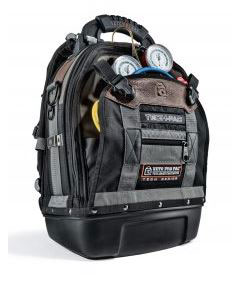
1. VETO Pro Pac Tool Bags

These backpacks make carrying comfortable. Tow your tools while keeping your hands free to climb and carry large replacement parts. Adhere to OSHA’s fall protection hands-free standards for roof ladders and carry what you need on your back.

These bags were built by tradesmen with tradesmen in mind. The design features a hinged handle, vertically tiered pockets, heavy duty construction, and a stabilizing molded waterproof base that keeps your tools dry in the nastiest conditions.

veto pro pac tool bags

2. APPION Micron Gauges

Take multiple, simultaneous measurements and show remote, real-time readings, live data logging and reporting. Share real-time information from the job site with your customers via a mobile and tablet app to create accountability and transparency.

These gauges are oil protected, durable and include a full range response from 760,000 Microns to 1 Micron.

appion micron gauges


3. APPION TEZ8 8cfm Vacuum Pump

These pumps, while on the expensive side, are well worth the cost. They are designed from the ground up to make AC/R system evacuations easier and faster than ever before. They quickly remove air and moister out of copper lines for 5-second oil changes that won’t break the vacuum. Don’t waste any more time draining out saturated oil. You can change the oil in a AC/R system while it’s still running. No refrigerant recovery or charging back up needed which means less labor time for you and your customers.

appion tez8 8cfm vacuum pump


4. 5 Foot connect hoses, Ritchie

1/4″ premium refrigerant charging/vacuum hose with antiblow back fittings, low-loss, 45 fittings that eliminate refrigerant venting and finger burns, knurled nut for easy access to tight areas, super-neoprene gaskets for long-life, slow deterioration.

5 foot connect hoses ritchie

5. Hilmor Orbital Flaring Tool

LG requires that all copper be flared this way because there are less leaks. This flaring tool spins on its axis to effectively produces perfect flares.

hilmor orbital flaring tool
6. ½ inch APPION Hose

Vacuum-certified MegaFlow Hoses are flexible and reliable with a larger interior diameter for high speed recovery and evacuation. Pull more air and moisture through this ½ inch hose. After all, time is money and this small diameter change could make any job move faster.

half inch appion hose
7. Qs5 vacuum pump- Inficon

This inexpensive and effective pump is designed for quick, deep evacuation. It is equipped with a large oil sightglass, easily accessible oil drain and innovative oil-trapping exhaust/demister.

This product carries a two year over the counter warranty exchange. No more wait time or freight costs on replacements.

qs5 vacuum pump inficon

8. Manifold Set with Sight Glass

Now you can see where there is air or moister in the system to prevent early compressor failure and acid in the system.

manifold set with sight glass
9. Klein Tools 11-in-1 Screwdriver/Nut Driver

This nifty tool offers you 11 drivers in one including size 1 and 2 Phillips bits, ¼ and 3/16 inch slotted bits and features a cushion grip handle and interchangeable blade.

klein tools 11 in 1 screwdriver nut driver

10. Hilmor Dual Port Thermometer & Clamps

Ditch the practice of measuring system temperatures with multiple tools. Hilmor’s manifold-compatible compact thermometer makes calculations easy with two readings.

hilmor dual port thermometer and clamps

Posted on
Posted in Energy Management

An energy audit is a formal survey, analysis and inspection of a building or company’s energy flows, processes, systems and conservation efforts. The Department of Energy encourages home energy audits for the sake of money and efficiency. All organizations should get regular energy audits to uncover problems, fix issues and maximize sustainability.

Energy Audit

Commercial Energy Audit Basics

Energy audits involve a professional inspector who assesses buildings, systems and programs for cost savings, waste reduction and sustainability opportunities. These formal audits result in an audit report that may contain accomplishments, recommendations and non-compliance findings. Energy audits will almost always identify redundancies, uncover managerial mistakes and reduce energy costs.  Each building is different, so audits each come with unique risks and opportunities.

Energy Audit Inspections

During the energy audit, an energy auditor will visit the site. They will most likely start off the event with an introductory meeting that will review goals and intentions.  A site inspection will include assessments of lighting, air conditioners, machine controls, refrigeration equipment, air compressors, heating and ventilation systems and anything else that is using energy. Remember, energy sometimes refers to power from either electronic or pneumatic systems. Production facilities often use air hoses to power machinery, so tiny leaks are equally wasteful and concerning.

Energy Audit Interviews

Energy auditors will want to interview team leaders, facility managers and upper administrators. Many companies that maintain international certification, such as the ISO 14001 Environmental Management System (EMS) credential, use energy audits to help maintain compliance with their program. These companies may steer auditors to only talk with model employees, but energy auditors often want to randomly interact with regular employees in order to really understand operations.

The audit will conclude with the auditor analyzing their metrics, such as pressures, light levels and power draw, along with other information to produce a final report that establishes energy conservation goals, standards, measures and suggestions.

Posted on
Posted in Building Automation

As owners continue to see pressure on rental prices, automating building and energy systems is emerging as a productive means to increase profitability.  By investing in these systems, facility owners are locking in profitability gains by reducing energy use, staff and waste.  There are a few reasons why automated tools achieve these goals.

building automation system

Efficiency Improvement and Waste Reduction

First and foremost, building automation systems improve efficiency be reducing the power used during off-hours automatically.  Additionally, they monitor temperatures during the day and slightly adjust to keep things comfortable yet at reduced power output levels.  Third, they reduce the waste water used in HVAC cooling systems, wasted power consumption and wasted materials from unnecessary maintenance.

Improve Profitability

Reducing the power output automatically reduces the costs required to run a building.  Facilities owners reduce power consumption by anywhere from 5% to 20% depending on the existing legacy systems.  That immediately translates to the bottom line and NOI.  Furthermore, maintenance staff are often reduced by one, two or three people.  Those savings flow straight to the bottom line as well.  While there is some upfront cost, the ROI recoups the value of the purchase in 2 to 3 years on average.

System Training

An investment in new building automation helps to improve the skills and capabilities of your staff as well.  While less people are needed to run and maintain a building, the remaining staff can be more nimble and capable.   BCS provides customized building automation system training- either on site or in our state of the art facilities to help your facilities team run their equipment as efficiently as possible.

Contact Us

Learn more about our services and offerings.

Service Requests

Our team is ready to assist. Please use one of the options below to submit your service request:

Warranty Claims

You can now submit warranty claims online via our fast and convenient online warranty process.

Become an Expert

Become an expert in building intelligence. Save money by lowering the total cost of ownership of your facility equipment. Sign up to receive helpful tips, tricks, and insights to facility management from people who’ve dealt with it all.

Become an Expert

Become an expert in building intelligence. Save money by lowering the total cost of ownership of your facility equipment. Sign up to receive helpful tips, tricks, and insights to facility management from people who’ve dealt with it all.